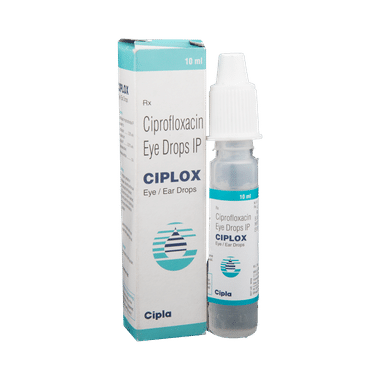

Biocip Eye/Ear Drops
 Prescription Required

Product introduction
Biocip Eye/Ear Drops should be used in the dose and duration as advised by your doctor. It may be taken with or without food, preferably at a fixed time. Avoid skipping any doses and finish the full course of treatment even if you feel better. Do not take a double dose to make up for a missed dose. Simply take the next dose as planned.
You may experience nausea as a side effect of this medicine. This is usually temporary and resolves on its own, but please consult your doctor if it bothers you or persists for a longer duration. Diarrhea may also occur as a side effect but should stop when your course is complete. Inform your doctor if it does not stop or if you find blood in your stools.
You should not take this medicine if you are allergic to any of its ingredients. Rarely, some people may have a severe allergic reaction which needs urgent medical attention. Signs of this include rash, swelling of the lips, tongue, or face, shortness of breath, or breathing problems. Special care should be taken in people with kidney problems while taking this medicine.
Uses of Biocip Eye/Ear Drops
- Treatment of Bacterial infections
- Treatment of Bacterial eye / ear infections
Benefits of Biocip Eye/Ear Drops
In Treatment of Bacterial infections
This medicine usually makes you feel better quite quickly. However, you should continue taking it as long as it is prescribed even when you feel better, to make sure that all bacteria are killed and do not become resistant.
In Treatment of Bacterial eye / ear infections
The dose and duration of treatment will be decided by your doctor based on your condition. Make sure you complete the full course of treatment. This will ensure that the infection is completely cured and prevent it from returning.
Side effects of Biocip Eye/Ear Drops
Common side effects of Biocip
- Corneal deposits
- Eye discomfort
- Ocular hyperemia
- Taste change
How to use Biocip Eye/Ear Drops
How Biocip Eye/Ear Drops works
Safety advice
Baby should be closely monitored for development of fever, loss of appetite and diarrhea. In case, any of the above happens please inform your doctor immediately.
What if you forget to take Biocip Eye/Ear Drops?
All substitutes
Quick tips
- You have been prescribed Biocip Eye/Ear Drops for the treatment of bacterial infections of the eye/ear.
- Do not skip any doses and finish the full course of treatment even if you feel better.
- Do not touch the tip to any surface, or to your eye/ear, to avoid contamination.
- You should continue using the medicine for 48 hours after your symptoms have cleared up.
- Talk to your doctor if your symptoms haven't started to improve within two days of starting treatment, if they get worse during treatment or if you get another eye /ear infection.
- Throw away any medicine left at the end of the course.
- If using Biocip Eye/Ear Drops for eye:
- Wait for at least 5-10 minutes before delivering the next medication in the same eye to avoid dilution.
- Do not wear contact lenses, while using this medication.
- It may cause short term blurring of vision when first used. Use caution before driving or using machines.
Fact Box
Patient concerns
User feedback
FAQs
Is Biocip Eye/Ear Drops safe?
Can I stop taking Biocip Eye/Ear Drops when I feel better?
Want to share the information?


Disclaimer:
Tata 1mg's sole intention is to ensure that its consumers get information that is expert-reviewed, accurate and trustworthy. However, the information contained herein should NOT be used as a substitute for the advice of a qualified physician. The information provided here is for informational purposes only. This may not cover everything about particular health conditions, lab tests, medicines, all possible side effects, drug interactions, warnings, alerts, etc. Please consult your doctor and discuss all your queries related to any disease or medicine. We intend to support, not replace, the doctor-patient relationship.References
- Petri WA Jr. Sulfonamides, Trimethoprim-Sulfamethoxazole, Quinolones, and Agents for Urinary Tract Infections. In: Brunton LL, Chabner BA, Knollmann BC, editors. Goodman & Gilman’s: The Pharmacological Basis of Therapeutics. 12th ed. New York, New York: McGraw-Hill Medical; 2011. pp. 1473-74.
- Chambers HF, Deck DH. Sulfonamides, Trimethoprim, & Quinolons. In: Katzung BG, Masters SB, Trevor AJ, editors. Basic and Clinical Pharmacology. 11th ed. New Delhi, India: Tata McGraw Hill Education Private Limited; 2009. pp. 819-20.
- Briggs GG, Freeman RK, editors. A Reference Guide to Fetal and Neonatal Risk: Drugs in Pregnancy and Lactation. 10th ed. Philadelphia, PA: Wolters Kluwer Health; 2015. pp. 275-78.
- Ciprofloxacin. Camberley Surrey: Novartis Pharmaceuticals UK Limited; 1993 [revised 01 May 2017]. [Accessed 01 Apr. 2019] (online) Available from:

- Chaves RG, Lamounier JA. Breastfeeding and maternal medications. J Pediatr (Rio J). 2004;80(5 Suppl):S189-98. [Accessed 01 Apr. 2019] (online) Available from:
- Central Drugs Standard Control Organisation (CDSCO). [Accessed 01 Apr. 2019] (online) Available from:
- Ciprofloxacin ophthalmic ointment [Drug Label]. Fort Worth, Texas: ALCON LABORATORIES, INC.; 2016. [Accessed 28 Mar. 2023] (online) Available from:
Marketer details
Lab tests offered by us