






Wheat
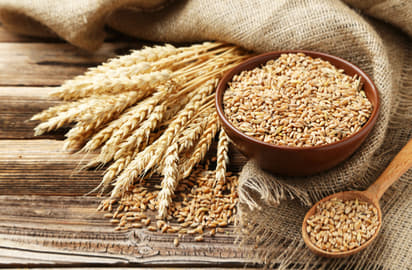
Wheat is the most widely cultivated cereal crop in the world. It is rich in carbohydrates, dietary fiber, proteins and minerals.
Wheat bran helps in managing constipation as it adds bulk to stools and helps in their easy passage mainly due to its laxative property. This laxative property also makes it useful for the management of piles. Wheat diet might also help in weight management as it gives a feeling of fullness and prevent overeating. Wheat flour is generally used to prepare chapatis. It is also added to various whole grain preparations like breads, noodles, pasta, oatmeal etc.
Wheat helps manage various skin problems like scars, burns, itching etc. as it has antibacterial and anti-inflammatory properties. Wheat flour along with milk and honey can be applied on the face to get a clean and glowing skin. Wheat germ oil can also be applied to the skin for managing skin irritation, dryness and tanning due to its antioxidant property.
It should be noted that Wheat contains gluten which may cause allergies in some people, so it is advisable for gluten intolerant individuals to avoid the use of wheat or wheat products[2][12].
Wheat bran helps in managing constipation as it adds bulk to stools and helps in their easy passage mainly due to its laxative property. This laxative property also makes it useful for the management of piles. Wheat diet might also help in weight management as it gives a feeling of fullness and prevent overeating. Wheat flour is generally used to prepare chapatis. It is also added to various whole grain preparations like breads, noodles, pasta, oatmeal etc.
Wheat helps manage various skin problems like scars, burns, itching etc. as it has antibacterial and anti-inflammatory properties. Wheat flour along with milk and honey can be applied on the face to get a clean and glowing skin. Wheat germ oil can also be applied to the skin for managing skin irritation, dryness and tanning due to its antioxidant property.
It should be noted that Wheat contains gluten which may cause allergies in some people, so it is advisable for gluten intolerant individuals to avoid the use of wheat or wheat products[2][12].
What are the synonyms of Wheat?
Triticum aestivum, Gehun, Godhi, Bahudugdha, Godhuma, Godumai, Godumbaiyarisi, Godumalu[1]
What is the source of Wheat?
Plant Based
Benefits of Wheat
What are the benefits of Wheat for Constipation?

MODERN SCIENCE VIEW
Wheat bran may be useful in managing constipation. Wheat bran has potent laxative property due to the presence of a high amount of fibre. It bulks up the fecal matter, increases the frequency of bowel movement and reduces intestinal transit time. It also increases fecal moisture and thus aids in easy removal of waste from the body[3][8-10].

AYURVEDIC VIEW
Wheat helps to manage constipation as it is rich in fiber and adds bulk to stool. This is due to its Guru (heavy) nature. It also stimulates intestinal contractions and peristaltic movements because of its Sara (mobility) nature. This helps in easy expulsion of stools and corrects constipation.
Tips:
1. Take Wheat flour and make chapati.
2. Have it 2-4 or as per your requirement in day.
Tips:
1. Take Wheat flour and make chapati.
2. Have it 2-4 or as per your requirement in day.
What are the benefits of Wheat for Piles?
MODERN SCIENCE VIEW
Wheat can be useful in managing piles (also known as hemorrhoids). Wheat bran is a rich source of fibre due to which it is increases bowel movement, moistens and bulks up fecal matter and aids in its easy removal[3][11][12].
AYURVEDIC VIEW
Piles are known as Arsh in Ayurveda which is caused by an unhealthy diet and a sedentary lifestyle. This leads to the impairment of all the three doshas, mainly Vata. An aggravated Vata causes a low digestive fire, leading to constipation. This causes swelling in the veins in the rectum area leading to pile mass. Wheat in diet helps to control constipation because of its Sara (mobility) property. It also balances Vata due to its Vata balancing nature and thus reduce the symptoms of piles.
Tips:
1. Take Wheat flour and make chapati.
2. Have 2-4 or as per your requirement in a day.
Tips:
1. Take Wheat flour and make chapati.
2. Have 2-4 or as per your requirement in a day.
What are the benefits of Wheat for Irritable bowel syndrome?
MODERN SCIENCE VIEW
Wheat may be useful in managing Irritable bowel syndrome (IBS). Wheat is a rich source of fibre due to which it is increases bowel movement, moistens and bulks up fecal matter and aids in its easy removal[3][8][13].
What are the benefits of Wheat for Type 2 diabetes mellitus?
MODERN SCIENCE VIEW
Wheat may not be useful in managing type 2 diabetes[3][18].
What are the benefits of Wheat for Stomach cancer?
MODERN SCIENCE VIEW
Although enough scientific evidence is not available, Wheat may be useful in managing stomach cancer. Wheat is rich in fibre, various phenolic acids, flavonoids and lignans that have potential antitumor activity[3][19][20].
What are the benefits of Wheat for Breast cancer?
MODERN SCIENCE VIEW
Wheat may be useful in managing breast cancer. Wheat has antioxidant and antiproliferative properties. It removes free radicals and helps in killing cancer cells. Wheat is also rich in fiber which may adsorb dietary carcinogens thus reducing the risk of development of cancer[3][19][21][22].
How effective is Wheat?
Likely effective
Constipation, Hypertension (high blood pressure), Irritable bowel syndrome, Piles
Likely ineffective
Type 2 diabetes mellitus
Insufficient evidence
Breast cancer, Stomach cancer

Precautions when using Wheat
Advice from Experts
MODERN SCIENCE VIEW
Some people may be intolerant to Wheat due to which they might develop celiac disease. So it is advisable to consult your doctor for appropriate diet substitutions[4].
Allergy
MODERN SCIENCE VIEW
Wheat may cause allergic reactions in some people due to the presence of gluten proteins. It may cause baker’s asthma and rhinitis. So it is advisable to consult your doctor if you experience allergic reactions after Wheat consumption[4].
Breastfeeding
MODERN SCIENCE VIEW
Wheat is safe to take during breastfeeding.
Pregnancy
MODERN SCIENCE VIEW
Wheat is safe to take during pregnancy.
FAQs about Wheat precautions
Recommended Dosage of Wheat
- Wheat Powder - ¼-½ cup a day or as per your requirement.
How to use Wheat
1. Roasted Wheat flour
a. Dry roast about ¼ cup of Wheat flour in a pan on low heat for 25-30 minutes.
b. Add 2 tablespoons ground sugar and mix well.
c. Roast for another 1-2 minutes.
d. Add 2 tablespoons ground almond and ⅛ tablespoon cardamom.
e. Add some water and let it cook for some time while stirring continuously.
f. Garnish with almonds, raisins and pistachios.
2. Wheat chapati
a. Sift 1 cup whole Wheat flour and a pinch of salt in a bowl.
b. Add 1 tablespoon olive oil and ¼ cup water to it.
c. Knead until firm and elastic.
d. Divide the kneaded flour into balls and roll each ball flat and round using a rolling pin.
e. Heat a pan on medium heat and place the flat rolled flour on it.
f. Cook on both sides until golden-brown in colour (approximately 1 minute on each side).
g. Cook for a few seconds on direct flame.
h. Add a few drops of oil on the cooked chapati (optional).
a. Dry roast about ¼ cup of Wheat flour in a pan on low heat for 25-30 minutes.
b. Add 2 tablespoons ground sugar and mix well.
c. Roast for another 1-2 minutes.
d. Add 2 tablespoons ground almond and ⅛ tablespoon cardamom.
e. Add some water and let it cook for some time while stirring continuously.
f. Garnish with almonds, raisins and pistachios.
2. Wheat chapati
a. Sift 1 cup whole Wheat flour and a pinch of salt in a bowl.
b. Add 1 tablespoon olive oil and ¼ cup water to it.
c. Knead until firm and elastic.
d. Divide the kneaded flour into balls and roll each ball flat and round using a rolling pin.
e. Heat a pan on medium heat and place the flat rolled flour on it.
f. Cook on both sides until golden-brown in colour (approximately 1 minute on each side).
g. Cook for a few seconds on direct flame.
h. Add a few drops of oil on the cooked chapati (optional).
Benefits of Wheat
FAQs about Wheat benefits
Precautions when using Wheat
Allergy
MODERN SCIENCE VIEW
Wheat may cause allergic reactions in some people who comes in contact with it. The allergic reaction may result in urticaria (or hives). So it is advisable to consult your doctor if you experience allergic reactions after coming in contact with Wheat[4][7].
Recommended Dosage of Wheat
- Wheat Paste - ¼-½ cup or as per your requirement.
How to use Wheat
1. Wheat Face Mask
a. Add 3 tablespoons of milk in a pan and bring it to a boil.
b. Remove from the stove.
c. Cool it to room temperature and add 2 tablespoons of honey.
d. Add ¼-½ cup whole Wheat flour.
e. Keep stirring to make a thick paste.
f. Apply evenly on face and neck.
g. Allow it to dry naturally.
h. Wash it off with normal water.
a. Add 3 tablespoons of milk in a pan and bring it to a boil.
b. Remove from the stove.
c. Cool it to room temperature and add 2 tablespoons of honey.
d. Add ¼-½ cup whole Wheat flour.
e. Keep stirring to make a thick paste.
f. Apply evenly on face and neck.
g. Allow it to dry naturally.
h. Wash it off with normal water.
Frequently asked questions
Q. Is Wheat better than rice?
MODERN SCIENCE VIEW
Wheat and rice have similar calorific value and carbohydrate content but they have different nutritional profiles. Wheat is richer in fibre, protein and minerals as compared to rice but takes more time to digest. For diabetics, Wheat is better than rice as it has a lower glycemic index.
AYURVEDIC VIEW
Both Wheat and rice are an equally important part of our diet. But it is advisable to choose rice over Wheat if your Agni (digestive fire) is weak. This is because Wheat has Guru (heavy) and Snigdha (oily or sticky) properties and makes it difficult to digest.
Q. Which country is the largest producer of Wheat?
MODERN SCIENCE VIEW
China is the largest producer of Wheat followed by India and Russia. China produces about 126 million metric tonnes of Wheat every year on a land area of about 24 million hectare.
Q. What is Wheat germ oil?
MODERN SCIENCE VIEW
Wheat seed consists of 3 parts- Bran (outermost layer), Endosperm (tissue around the embryo of seed) and Germ (embryo). Wheat germ oil is extracted from the germ. It is used in many commercial preparations such as skin creams, lotions, soap and shampoo.
Q. Does Wheat cause flatulence?
MODERN SCIENCE VIEW
Wheat may cause flatulence (or gas) due to malabsorption of its carbohydrate content[3][5].
AYURVEDIC VIEW
Yes, Wheat may cause flatulence if someone has weak Agni (digestive fire). This is because Wheat has Guru (heavy), Snigdha (oily or sticky) properties that makes it difficult to digest. This causes flatulence.
Q. Does Wheat cause intestinal inflammation?
MODERN SCIENCE VIEW
Yes, Wheat may cause inflammation in the intestines by increasing intestinal permeability and initiating a pro inflammatory immune response[4].
AYURVEDIC VIEW
Yes, Wheat may cause intestinal inflammation because it has Guru (heavy) and Snigdha (oily or sticky) properties. This makes it difficult to digest and causes intestinal irritation.
Q. Is Wheat flour bad for health?
MODERN SCIENCE VIEW
Modern Wheat has been altered over the years by selective breeding to produce enriched Wheat varieties. These varieties may cause sugar spike and gluten intolerance in some people. Moreover, these modern Wheat varieties have been stripped off all the good nutrients and provides very less health benefits[6].
AYURVEDIC VIEW
No, Wheat flour is a nourishing food that has various health benefits for your body. But if your Agni (digestive fire) is weak, it might cause upset stomach and irritated intestine. This is because it has Guru (heavy) and Snigdha (oily or sticky) properties and makes it difficult to digest.
Q. Is Wheat good for weight loss?
MODERN SCIENCE VIEW
Yes, Wheat may be useful in managing weight. The presence of fibre in Wheat leads to increased satiety and reduces energy intake. High fibre content also aids in regulating appetite and may thus be useful in weight loss[12][24].
AYURVEDIC VIEW
Wheat is useful in managing weight. Wheat gives a feeling of satiety and reduces craving. This is because it takes time to digest due to its Guru (heavy) nature.
Q. Is Wheat good for health?
MODERN SCIENCE VIEW
Wheat is a rich source of dietary fiber, protein, minerals and B-group vitamins, all of which are good for health. It may be useful in managing disease such as breast and colon cancers, obesity, gastrointestinal disease and cardiovascular diseases[12][24].
Q. Is Wheat chapati good for diabetics?
MODERN SCIENCE VIEW
Wheat chapati may be useful in managing diabetes due to its blood glucose level lowering property. However, it may not be useful specifically in case of type 2 diabetes[18][25].
Q. Is Wheat good for cancer of colon and rectum?
MODERN SCIENCE VIEW
Yes, Wheat may be useful in managing cancer of the colon and rectum. Wheat contains fibre and lignans that have antitumor activity. It inhibits the growth and proliferation of cancer cells by promoting apoptosis in cancerous cells[14-17].
Q. Can Wheat powder cause skin allergy when applied externally?
AYURVEDIC VIEW
No, Wheat powder does not cause any skin allergy when applied externally. It helps to reduce inflammation and remove dryness due to its Ropan (healing) and Snigdha (oily) properties.
Q. Is Wheat good for the skin?
MODERN SCIENCE VIEW
Yes, Wheat germ contains riboflavin, vitamin E and many trace minerals. Wheat germ oil is a rich source of vitamin E, D and A, proteins and lecithin. Topical application of Wheat germ oil may be useful in managing skin irritation due to dryness. Wheat germ oil also has antioxidant property and is rich in fatty acids. When applied on the skin it may aid in promoting blood circulation and protect against the harmful effects of the sun. Moreover, it may be useful in managing the symptoms of dermatitis[12].
Q. Is Wheat flour good for the face?
MODERN SCIENCE VIEW
Yes, Wheat flour may be good for the face. Wheat flour has antibacterial and anti-inflammatory property. It may be dusted over areas of the skin with scars, burns, itching etc. to avoid infection and reduce inflammation[12].
Disclaimer
The content is purely informative and educational in nature and should not be construed as medical advice. Please use the content only in consultation with an appropriate certified medical or healthcare professional.
Author Details

MSc, M.Tech

BAMS

MD (Pharmacology), MBBS
Last updated 29 Aug 2022 | 04:38 PM (IST)

Introduction
Internal Consumption
External Use
FAQs
References