


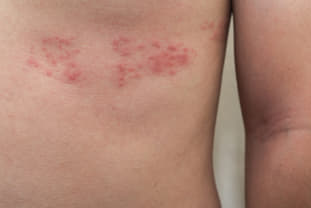
Shingles

Shingles, caused by the varicella-zoster virus (VZV), primarily affects adults who have had chickenpox earlier. After chickenpox recovery, the virus remains dormant in certain nerve cells of the body, reactivating later in life as Shingles. Factors like aging, stress, certain medications, or weak immunity can increase the risk of reactivation.
Shingles present with a painful, blistering rash typically appearing in a band on one side of the body. It is accompanied by symptoms like tingling, itching, fever, and headache. |
Shingles usually resolve within weeks. However, complications such as postherpetic neuralgia, skin infections, and eye problems can arise, particularly in older adults or those with weakened immune systems.
Vaccination can prevent the condition. It is recommended for individuals 50 and older and 19 and older with weakened immune systems.
Early diagnosis and intervention are crucial for managing shingles and reducing its complications. Treatment focuses on reducing the virus's effects and managing pain. Covering the rash is vital to avoid virus transmission, especially to vulnerable groups like pregnant women and those with weakened immunity.


