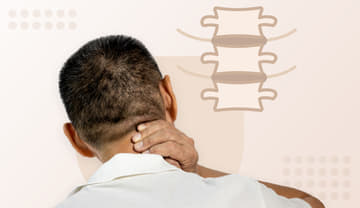
Spondylosis is a degenerative disease of the spine that affects the intervertebral discs and joints. With age, the body experiences normal wear and tear of the joints, cartilages, ligaments, and other soft tissues. When these changes occur in the spine, it leads to spondylosis.
Spondylosis can be broadly divided into cervical spondylosis (spondylosis of the neck) and lumbar spondylosis (spondylosis of the lower back). Pain and stiffness in the spine is the most common symptom of spondylosis. Occasionally, spondylosis may cause more severe neurological symptoms, such as radiating pain, tingling, numbness, or even partial or complete paralysis.
A healthy lifestyle with regular exercises can help prevent the pain and stiffness that occur due to spondylosis. Spondylosis can be successfully treated using a combination of oral and topical analgesics, muscle relaxants, physiotherapy, and exercises.