






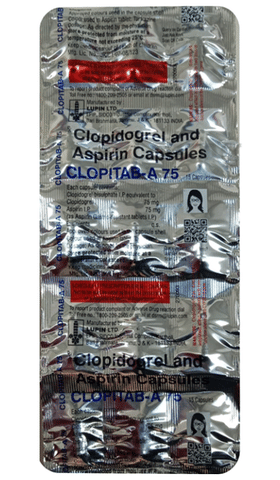
Clopitab-A 75 Capsule
Written By Dr. Balshine Singh Kanwar, MD, MBBS
Reviewed By Dr. Lalit Kanodia, MBA, MD Pharmacology
Last updated on 12 Nov 2024 | 01:02 AM (IST)
Clopitab-A 75 Capsule is a combination of two antiplatelet medicines or blood thinner used to reduce the formation of harmful blood clots in blood vessels. It is used to prevent a heart attack or stroke in people with heart disease. It is also used to treat acute coronary syndrome (ACS).
 Genuine
Authenticity Assured
 Prescription
required
₹88.5 MRP ₹91.253% off


General Information

The content is shown in English


Safety advice

Alcohol
UNSAFE
It is unsafe to consume alcohol with Clopitab-A 75 Capsule.

Pregnancy
CONSULT YOUR DOCTOR
Clopitab-A 75 Capsule is unsafe to use during pregnancy as there is definite evidence of risk to the developing baby. However, the doctor may rarely prescribe it in some life-threatening situations if the benefits are more than the potential risks. Please consult your doctor.

Breast feeding
CONSULT YOUR DOCTOR
Clopitab-A 75 Capsule is probably unsafe to use during breastfeeding. Limited human data suggests that the drug may pass into the breastmilk and harm the baby.

Driving
UNSAFE
Clopitab-A 75 Capsule may decrease alertness, affect your vision or make you feel sleepy and dizzy. Do not drive if these symptoms occur.

Kidney
CAUTION
Clopitab-A 75 Capsule should be used with caution in patients with kidney disease. Dose adjustment of Clopitab-A 75 Capsule may be needed. Please consult your doctor.
Use of Clopitab-A 75 Capsule is not recommended in patients with severe kidney disease.
Use of Clopitab-A 75 Capsule is not recommended in patients with severe kidney disease.

Liver
CAUTION
Clopitab-A 75 Capsule should be used with caution in patients with liver disease. Dose adjustment of Clopitab-A 75 Capsule may be needed. Please consult your doctor.
Use of Clopitab-A 75 Capsule is not recommended in patients with severe liver disease.
Use of Clopitab-A 75 Capsule is not recommended in patients with severe liver disease.

References


Related products
Products related to Clopitab-A 75 Capsule





100% genuine products

Safe & secure payments

No contact delivery

Fully sanitized facilities
Patient concerns
I use clopitab-A 75 i am worried for asprin side effects I had stroke in 2015

Dr. Vikas Sharma
Neurology
talk to ur
I had done by pass surgery 3crafts before 2 years now morning i take Clopitab a 150mg & starpress XL 25mg night I take tonact 10 mg This tablets how long I take

Dr. Nabajit Talukdar
Interventional Cardiology
Long term can change clopitab a to ecosprin 150 mg .

Want to know more
We provide you with authentic, trustworthy and relevant information
Have issue with the content
Why we need a prescription?

Provide right medicines
Prescriptions are complex documents. We proof read and recheck at various steps to provide you the right medication in the correct form and dose

In accordance with the law
Most medicines cannot be sold without a valid prescription, as per the Drugs and Cosmetics Act, 1940 and Rules, 1945
