






Combiflam Tablet
Written By Dr. Shreya Gupta, MDS (Oral Pathology & Microbiology), BDS
Reviewed By Dr. Ashish Ranjan, MD (Pharmacology), MBBS
Last updated on 12 Nov 2024 | 01:03 AM (IST)
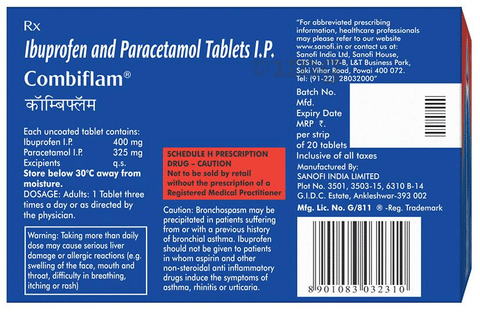
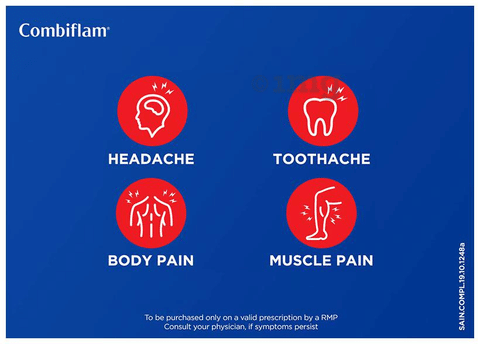
Combiflam Tablet contains two painkiller medicines. They work together to reduce pain, fever, and inflammation. It is used to treat many conditions such as headache, muscle pain, pain during periods, toothache, and joint pain.
 Genuine
Authenticity Assured
 Prescription
required
₹40.6 MRP ₹41.873% off

General Information

The content is shown in English



All substitutes for Combiflam Tablet
For information purposes only. Consult a doctor before taking any medicine.
Flexon Tablet
by Aristo Pharmaceuticals Pvt Ltd
₹1.55/tablet
24% cheaper

Fenceta 400mg/325mg Tablet
by Alkem Laboratories Ltd
₹1.59/tablet
22% cheaper
Duoflam P 400mg/325mg Tablet
by Maneesh Pharmaceuticals Ltd
₹1.81/tablet
11% cheaper
Buflam Plus Tablet
by Ornate Labs Pvt Ltd
₹1.16/tablet
43% cheaper
Rubigesic P 400 mg/325 mg Tablet
by Bevit Pharmaceuticals Ltd
₹3.86/tablet
90% costlier
Safety advice

Alcohol
UNSAFE
It is unsafe to consume alcohol with Combiflam Tablet.

Pregnancy
CONSULT YOUR DOCTOR
Combiflam Tablet may be unsafe to use during pregnancy. Although there are limited studies in humans, animal studies have shown harmful effects on the developing baby. Your doctor will weigh the benefits and any potential risks before prescribing it to you. Please consult your doctor.

Breast feeding
CONSULT YOUR DOCTOR
Combiflam Tablet is probably unsafe to use during breastfeeding. Limited human data suggests that the drug may pass into the breastmilk and harm the baby.

Driving
UNSAFE
Combiflam Tablet may decrease alertness, affect your vision or make you feel sleepy and dizzy. Do not drive if these symptoms occur.

Kidney
CAUTION
Combiflam Tablet should be used with caution in patients with kidney disease. Dose adjustment of Combiflam Tablet may be needed. Please consult your doctor.

Liver
CAUTION
Combiflam Tablet should be used with caution in patients with liver disease. Dose adjustment of Combiflam Tablet may be needed. Please consult your doctor.
However, the use of Combiflam Tablet is not recommended in patients with severe liver disease and active liver disease.
However, the use of Combiflam Tablet is not recommended in patients with severe liver disease and active liver disease.
Related lab tests
References

Related products
Products related to Combiflam Tablet






100% genuine products

Safe & secure payments

No contact delivery

Fully sanitized facilities
Patient concerns
Fever from yesterday night which is causes mild cold body pain

Dr. Pushkar Mani
Physician
take combiflam one tablet sos
Slight fever and pain in joints
Dr. Pushkar Mani
Physician
Combiflam twice daily for 3 days

Want to know more
We provide you with authentic, trustworthy and relevant information
Have issue with the content
Why we need a prescription?
