






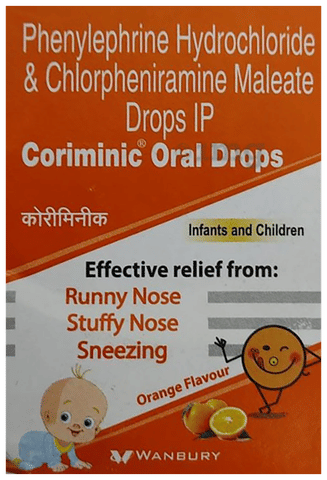



Coriminic Drops
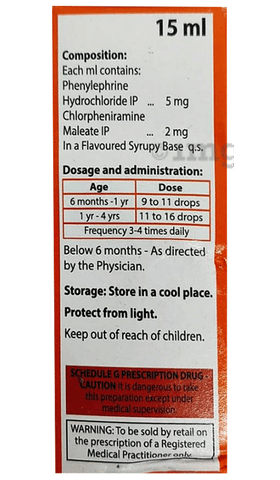
Chlorpheniramine Maleate (2mg/ml)+ Phenylephrine (5mg/ml)
 Genuine
Authenticity Assured
 Prescription
required
Coriminic Drops is a medicine used in symptomatic treatment of common cold in children. It provides quick relief from common cold symptoms such as runny nose, stuffy nose, and sneezing.
Written By Dr. Shreya Gupta, MDS (Oral Pathology & Microbiology), BDS,
Reviewed By Dr. Varun Gupta, MD Pharmacology, MBBS,
Last updated on 12 Nov 2024 | 01:00 AM (IST)
Written By Dr. Shreya Gupta, MDS (Oral Pathology & Microbiology), BDS,
Reviewed By Dr. Varun Gupta, MD Pharmacology, MBBS,
Last updated on 12 Nov 2024 | 01:00 AM (IST)
General Information
Contains
Chlorpheniramine Maleate (2mg/ml)+ Phenylephrine (5mg/ml)
Marketer
Wanbury Ltd
Storage
Store below 30°C
The content is shown in English



All substitutes for Coriminic Drops
For information purposes only. Consult a doctor before taking any medicine.
T-Minic Oral Drops Orange
by Glaxo SmithKline Pharmaceuticals Ltd
₹84.7/oral drops
28% costlier

Delcon Drops
by Veritaz Healthcare Ltd
₹70.6/oral drops
7% costlier
Noblok-AF Drops
by Mankind Pharma Ltd
₹52.7/oral drops
20% cheaper
Welminic Oral Drops
by Delcure Life Sciences
₹66/oral drops
same price
Tuscold-AF Oral Drops
by Med Manor Organics Pvt Ltd
₹65/oral drops
2% cheaper
Safety advice

Alcohol
CAUTION
Caution is advised when consuming alcohol with Coriminic Drops. Please consult your doctor.

Pregnancy
CONSULT YOUR DOCTOR
Information regarding the use of Coriminic Drops during pregnancy is not available. Please consult your doctor.

Breast feeding
CONSULT YOUR DOCTOR
Information regarding the use of Coriminic Drops during breastfeeding is not available. Please consult your doctor.

Driving
CONSULT YOUR DOCTOR
It is not known whether Coriminic Drops alters the ability to drive. Do not drive if you experience any symptoms that affect your ability to concentrate and react.

Kidney
CONSULT YOUR DOCTOR
There is limited information available on the use of Coriminic Drops in patients with kidney disease. Please consult your doctor.

Liver
CONSULT YOUR DOCTOR
There is limited information available on the use of Coriminic Drops in patients with liver disease. Please consult your doctor.
References
- DailyMed. Chlorpheniramine maleate, phenylephrine HCl. [Accessed 18 Apr. 2019] (online) Available from:

- Chlorpheniramine. Brentford, Middlesex: GlaxoSmithKline Consumer Healthcare; 1997 [revised 12 Apr. 2016]. [Accessed 18 Apr. 2019] (online) Available from:
- Phenylephrine Hydrochloride and Chlorpheniramine Maleate [Prescription Information]. 2020. [Accessed 16 Sep. 2024] (online) Available from:
Related products
Products related to Coriminic Drops




Related ayurvedic ingredients


100% genuine products

Safe & secure payments

No contact delivery

Fully sanitized facilities

Want to know more
We provide you with authentic, trustworthy and relevant information
Have issue with the content
Why we need a prescription?
