







347 people
bought recently
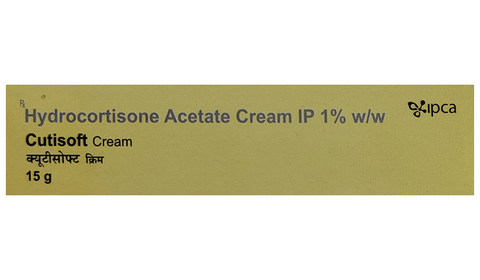
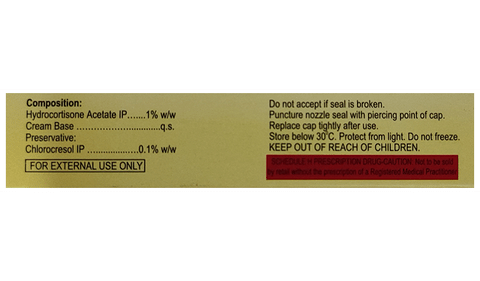


Cutisoft Cream
Hydrocortisone (1% w/w)
 Genuine
Authenticity Assured
 Prescription
required
Cutisoft Cream is a topical steroid used for treatment of mild to moderate inflammatory skin disorders such as eczema. It prevents the release of substances that cause inflammation and provides relief from swelling, redness, and itching in the affected area.
Written By Dr. Love Sharma, PhD (Pharmacology), PGDPRA,
Reviewed By Dr. Varun Gupta, MD Pharmacology, MBBS,
Last updated on 12 Nov 2024 | 01:10 AM (IST)
Written By Dr. Love Sharma, PhD (Pharmacology), PGDPRA,
Reviewed By Dr. Varun Gupta, MD Pharmacology, MBBS,
Last updated on 12 Nov 2024 | 01:10 AM (IST)
₹139
₹142.95
3% off
Get for
₹125

on orders above ₹150
Use Code 1MGANEW
Get for
₹128

on orders above ₹200
Use Code 1MGANEW
1/2
Welcome Gift | For First Order
10% EXTRA OFF
15 gm Cream



General Information

The content is shown in English



All substitutes for Cutisoft Cream
For information purposes only. Consult a doctor before taking any medicine.
Tendrone 1% Cream
by Yash Pharma Laboratories Pvt Ltd
₹8.87/gm of cream
4% cheaper

Drocort Cream
by AGIO Pharmaceuticals Ltd
₹4.85/gm of cream
48% cheaper
Atonide-H Cream
by Curatio Healthcare India Pvt Ltd
₹8.75/gm of cream
6% cheaper
Lapcort 1% Cream
by Amwill Healthcare
₹5.35/gm of cream
42% cheaper
Dermicort Cream
by Sanstuti Pharmaceuticals Pvt Ltd
₹9.6/gm of cream
4% costlier
Safety advice

Alcohol
No interaction found/established

Pregnancy
CONSULT YOUR DOCTOR
Cutisoft Cream may be unsafe to use during pregnancy. Although there are limited studies in humans, animal studies have shown harmful effects on the developing baby. Your doctor will weigh the benefits and any potential risks before prescribing it to you. Please consult your doctor.

Breast feeding
CONSULT YOUR DOCTOR
Cutisoft Cream is probably unsafe to use during breastfeeding. Limited human data suggests that the drug may pass into the breastmilk and harm the baby.

Driving
No interaction found/established

Kidney
No interaction found/established

Liver
No interaction found/established
References
- Briggs GG, Freeman RK, editors. A Reference Guide to Fetal and Neonatal Risk: Drugs in Pregnancy and Lactation. 10th ed. Philadelphia, PA: Wolters Kluwer Health; 2015. pp.. 661-66.
- Hydrocortisone. Clonmel, Co. Tipperary: Pinewood Laboratories Limited; 1997 [revised 21 May 2018]. [Accessed 04 Apr. 2019] (online) Available from:

- Chaves RG, Lamounier JA. Breastfeeding and maternal medications. J Pediatr (Rio J). 2004;80(5 Suppl):S189-S198. [Accessed 04 Apr. 2019] (online) Available from:
- Central Drugs Standard Control Organisation (CDSCO). [Accessed 03 Apr. 2019] (online) Available from:
- Hydrocortisone Cream [Prescribing Information]. Johnson City, TN: Crown Laboratories, Inc.; 2016. [Accessed 20 Feb. 2024] (online) Available from:
Related products
Products related to Cutisoft Cream



100% genuine products

Safe & secure payments

No contact delivery

Fully sanitized facilities

Want to know more
We provide you with authentic, trustworthy and relevant information
Have issue with the content
Why we need a prescription?
