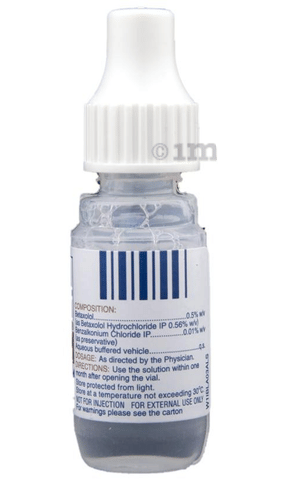


Iobet Eye Drop
Written By Dr. Anuj Saini, MMST, MBBS
Reviewed By Dr. Ashish Ranjan, MD (Pharmacology), MBBS
Last updated on 12 Nov 2024 | 01:07 AM (IST)
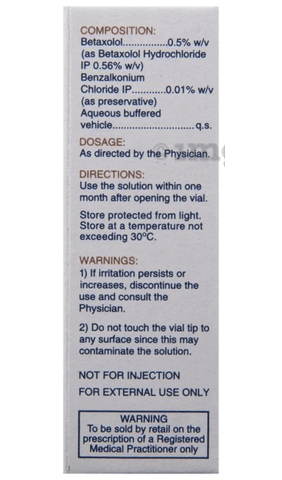
Iobet Eye Drop is a medicine used to treat elevated intraocular pressure (high pressure inside the eye) in people with ocular hypertension and certain types of glaucoma. It lowers the pressure in the eye by decreasing the production of fluid and reduces the risk of vision loss.
Authenticity Assured
required
₹53.4 MRP ₹553% offÂ

Â
 ![]()
0
General Information
The content is shown in English



Product introduction
Always wash your hands before using Iobet Eye Drop. Use only the number of drops that your doctor has prescribed and wait for about five minutes between each drop. If you wear soft contact lenses, remove them before using the drops and wait for at least 15 minutes before putting them back in. If you are also using another eye medicine, wait for at least 10 minutes before using it. Read the leaflet that comes with the medicine for a full guide on how to use the drops and get the most benefit. Do not touch the tip of the dropper or bottle. This may lead to infection. You should use this medicine regularly to get the most benefit and it is best done at the same time(s) each day. If you want to stop using it, consult your doctor first.
The most common side effects are blurred vision, irritation, or pain in the eye, watery eyes, and headache. There are other, less common, side effects affecting other parts of the body, some of which may be serious as Iobet Eye Drop is absorbed into the systemic circulation. Read the leaflet that comes with the medicine and consult your doctor if you are bothered by any side effects.
You should not use this medicine if you have asthma, severe COPD, or a serious heart condition. Inform your doctor if you have, or have had, coronary heart disease, heart failure, diabetes, breathing problems, an overactive thyroid gland or liver, or kidney disease. It is not known if this medicine will harm an unborn baby but tell your doctor if you are pregnant or are planning to become pregnant. Iobet Eye Drop should not be used if you are breastfeeding.
The most common side effects are blurred vision, irritation, or pain in the eye, watery eyes, and headache. There are other, less common, side effects affecting other parts of the body, some of which may be serious as Iobet Eye Drop is absorbed into the systemic circulation. Read the leaflet that comes with the medicine and consult your doctor if you are bothered by any side effects.
You should not use this medicine if you have asthma, severe COPD, or a serious heart condition. Inform your doctor if you have, or have had, coronary heart disease, heart failure, diabetes, breathing problems, an overactive thyroid gland or liver, or kidney disease. It is not known if this medicine will harm an unborn baby but tell your doctor if you are pregnant or are planning to become pregnant. Iobet Eye Drop should not be used if you are breastfeeding.
Uses of Iobet Eye Drop
- Glaucoma
- Ocular hypertension
Benefits of Iobet Eye Drop
Glaucoma
Iobet Eye Drop belongs to a group of medicines called beta-blockers. It reduces pressure in the eyes (ocular hypertension) that can lead to an illness called glaucoma. It may be used alone or with other eye drops. Do not use it too often as that can make it less effective. You should only use it in the affected eye and take it regularly as prescribed by your doctor. Most people with glaucoma do not feel sick. If you stop taking it, the pressure in your eye will not be controlled. This could lead to a loss of sight.
Ocular hypertension
Iobet Eye Drop helps reduce pressure in your eyes. It increases the flow of fluid from inside the eye into the bloodstream thereby lowering the increased eye pressure. If the pressure in your eye is too high, it can damage your sight. You should use it regularly as prescribed by your doctor.
Side effects of Iobet Eye Drop
Most side effects do not require any medical attention and disappear as your body adjusts to the medicine. Consult your doctor if they persist or if you’re worried about them
Common side effects of Iobet
- Eye discomfort
- Blurred vision
- Headache
- Increased lacrimation
How to use Iobet Eye Drop
This medicine is for external use only. Use it in the dose and duration as advised by your doctor. Check the label for directions before use. Hold the dropper close to the eye without touching it. Gently squeeze the dropper and place the medicine inside the lower eyelid. Wipe off the extra liquid.
How Iobet Eye Drop works
Iobet Eye Drop is a beta blocker. It works by decreasing the production of aqueous humour (fluid in the eye), thereby lowering the increased eye pressure.
All substitutes for Iobet Eye Drop
For information purposes only. Consult a doctor before taking any medicine.
Quick tips
- Iobet Eye Drop helps lower high pressure in the eye and reduces the risk of vision loss.
- Notify your doctor if you have lung or heart diseases as Iobet Eye Drop may worsen these conditions.
- Apply pressure on the corner of the eye (close to the nose) for about 1 minute, immediately after instilling the drop.
- Wait for at least 5-10 minutes before delivering the next medication in the same eye to avoid dilution.
- Stinging sensation may occur for 1-2 mins. Notify your doctor if it persists for longer.
- Make sure to use within 4 weeks of opening the bottle.
Safety advice

Alcohol
No interaction found/established

Pregnancy
CONSULT YOUR DOCTOR
Iobet Eye Drop may be unsafe to use during pregnancy. Although there are limited studies in humans, animal studies have shown harmful effects on the developing baby. Your doctor will weigh the benefits and any potential risks before prescribing it to you. Please consult your doctor.

Breast feeding
SAFE IF PRESCRIBED
Iobet Eye Drop is probably safe to use during breastfeeding. Limited human data suggests that the drug does not represent any significant risk to the baby.

Driving
UNSAFE
Iobet Eye Drop may decrease alertness, affect your vision or make you feel sleepy and dizzy. Do not drive if these symptoms occur.
Kidney
No interaction found/established

Liver
No interaction found/established
Frequently asked questions
Iobet Eye Drop reduces the pressure inside the eyes, known as intraocular pressure. This helps to reduce the risk of damage to the optic nerve responsible for normal vision. If the pressure in the eye is not controlled, it can gradually lead to blindness. Iobet Eye Drop effectively controls ocular hypertension and certain types of glaucoma by decreasing the pressure in the eyes.
Iobet Eye Drop should be used in the dose and duration advised by your doctor. Iobet Eye Drop eye drops are usually instilled once or twice a day at evenly spaced intervals, until the pressure in the eye is controlled (about 4 weeks). After that, it can be instilled once a day or as advised by the doctor. Follow the directions of your doctor carefully, and ask your doctor to explain any part you do not understand.
Iobet Eye Drop may cause side effects such as blurred vision and headache. Some other side effects of this medicine include watery eyes, redness of the eye, eye irritation, burning or discomfort. If any of these side effects bother you, please consult your doctor.
No, you should not stop using Iobet Eye Drop without consulting your doctor. If you stop taking this medicine suddenly, the pressure in your eyes may not be controlled which may increase the risk of loss of sight.
You should contact your doctor immediately if you develop an eye infection, conjunctivitis or an eyelid reaction. Also, you should inform the doctor if you have an eye injury or eye surgery. Discuss with your doctor if you have to continue using Iobet Eye Drop.
No, you should remove your contact lenses before instilling Iobet Eye Drop. You can re-insert the lens 15 minutes after using Iobet Eye Drop. Contact your doctor if there is any eye irritation that persists.
Fact Box
Chemical Class
Tyrosols Derivative
Habit Forming
No
Therapeutic Class
OPHTHAL
Action Class
Beta blocker (Topical)
References
- Westfall TC, WestfallIn DP. Adrenergic Agonists and Antagonists. In: Brunton LL, Chabner BA, Knollmann BC, editors. Goodman & Gilman’s: The Pharmacological Basis of Therapeutics. 12th ed. New York, New York: McGraw-Hill Medical; 2011. p. 328.
- Robertson D, Biaggioni I. Adrenoreceptor Antagonists Drugs. In: Katzung BG, Masters SB, Trevor AJ, editors. Basic and Clinical Pharmacology. 11th ed. New Delhi, India: Tata McGraw Hill Education Private Limited; 2009. p. 159.
- Briggs GG, Freeman RK, editors. A Reference Guide to Fetal and Neonatal Risk: Drugs in Pregnancy and Lactation. 10th ed. Philadelphia, PA: Wolters Kluwer Health; 2015. pp. 141-42.
- Drugs.com. Betaxolol. [Accessed 04 Apr. 2019] (online) Available from:
- Betaxolol hydrochloride ophthalmic suspension. Fort Worth, Texas: Alcon Laboratories, Inc.; 1985 [revised Jun. 2007]. [Accessed 29 Jan. 2019] (online) Available from:
- Central Drugs Standard Control Organisation (CDSCO). [Accessed 04 Apr. 2019] (online) Available from:
Related products
Products related to Iobet Eye Drop
100% genuine products

Safe & secure payments

No contact delivery

Fully sanitized facilities

User feedback
Twice A Day
70%
Once A Day
24%
Thrice A Day
5%
Four Times A Day
1%
Glaucoma
100%
Average
58%
Poor
25%
Excellent
17%
Blurred vision
25%
Burning eyes
25%
Stinging in the eyes
25%
No Side Effect
25%
With or without food
100%
Average
67%
Not Expensive
33%
Patient concerns
Doctor advised for medication for glaucoma suspect only because eye pressure is 22 but all other tests are normal.medicine , 9 pm drops is prescribed. Please advice
Dr. Vishal Arora
Ophthalmology
Ocular hypertension can lead to glaucoma eventually. Continue the drops
I have been taking Timolet OD drops everyday for the last three months to help with high ocular pressure. Lately I have been feeling opaqueness in vision.
Dr. Richa Jain
Ophthalmology
Visit glaucoma specialist for eye examination
Want to know more
We provide you with authentic, trustworthy and relevant informationHave issue with the content

Disclaimer
Tata 1mg's sole intention is to ensure that its consumers get information that is expert-reviewed, accurate and trustworthy. However, the information contained herein should NOT be used as a substitute for the advice of a qualified physician. The information provided here is for informational purposes only. This may not cover everything about particular health conditions, lab tests, medicines, all possible side effects, drug interactions, warnings, alerts, etc. Please consult your doctor and discuss all your queries related to any disease or medicine. We intend to support, not replace, the doctor-patient relationship.
Marketer details
Name: FDC Ltd
Address: B-8, MIDC Area, Waluj - 431 136, Dist. Aurangabad, Maharashtra
Vendor Details
Country of origin: India
Lab tests offered by us
- CBC (Complete Blood Count)
- FBS (Fasting Blood Sugar)
- Thyroid Profile Total (T3, T4 & TSH)
- HbA1c (Glycosylated Hemoglobin)
- Glucose - Postprandial
- Lipid Profile
- Vitamin D (25-Hydroxy)
- Urine R/M (Urine Routine & Microscopy)
- Coronavirus Covid-19 Test (RT-PCR technique)
- LFT (Liver Function Test)
- Kidney Function Test
- TSH (Thyroid Stimulating Hormone) Ultrasensitive
- ESR (Erythrocyte Sedimentation Rate)
- Uric Acid
- Vitamin B12
- C- Reactive Protein Quantitative
- Urine Culture and Sensitivity
- Serum Electrolyte
- Serum Calcium
- Creatinine
- Diabetes Screening
- KFT with Electrolytes (Kidney Function Test with Electrolytes)
- Cholesterol - Total
- Hemoglobin
- Complete Haemogram
Why we need a prescription?