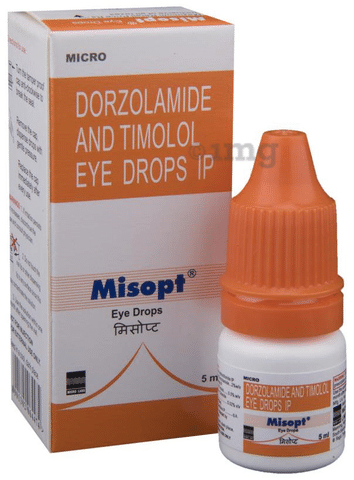
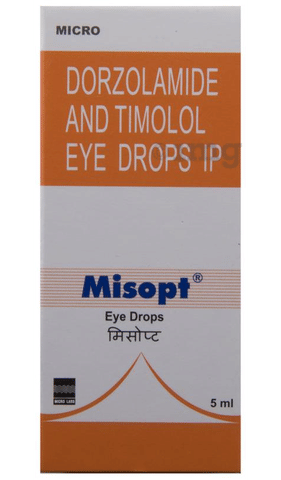
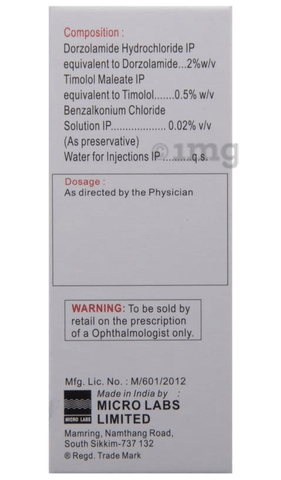
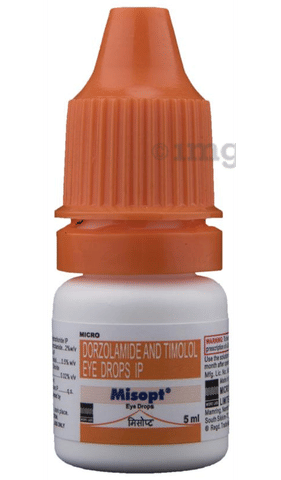
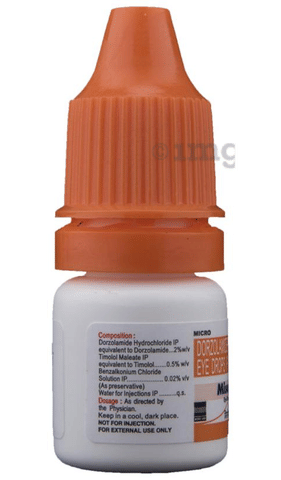




Misopt Eye Drop
Written By Dr. Radhika Dua, MDS, BDS,
Reviewed By Dr. Shilpa Garcha, MD (Pharmacology), MBBS,
Last updated on 12 Nov 2024 | 01:00 AM (IST)
General Information


Product introduction
Misopt Eye Drop is to be used only in the affected eye. Use it in the dose and duration as advised by the doctor. Read the label carefully for instruction before you use the medicine. Wash your hands before using this medicine. Do not use too much or too little. Use it in the exact dose as prescribed by the doctor or as instructed in the label.
Use of this medicine may cause burning sensation, stinging, and irritation at the application site. It may also cause headache, corneal erosion, eyelid inflammation, sinusitis, nausea, and weakness. These are usually temporary and resolve with time. However, if they persist or get worse, inform your doctor. In case of accidental contact with your ears, nose, or mouth, immediately rinse it with water.
Inform your doctor if you have a known allergy to any of the ingredients in this medicine or if you are taking any other medication. It is advised not to drive or operate heavy machinery immediately after using this medicine as it may cause temporary blurring of vision and may affect your ability to drive.
Uses of Misopt Eye Drop
- Treatment of Glaucoma
- Treatment of Ocular hypertension
Benefits of Misopt Eye Drop
Glaucoma is an eye disease that damages the optic nerve which is essential for proper vision. This damage is often caused by an abnormally high pressure in the eye. Misopt Eye Drop is used to reduce swelling and pressure inside the eye. This helps prevent complications of glaucoma such as blindness and improves the vision. This medicine may be used alone or with other eye drops. Glaucoma cannot be prevented. Frequent monitoring, regular checkups can help detect the disease in its early stages.
Ocular hypertension is a condition where the pressure inside the eye is higher than normal eye pressure due to fluid build-up. Misopt Eye Drop increases the flow of fluid from inside the eye into the bloodstream thereby lowering the increased eye pressure. This prevents further damage or complications such as change in vision or even loss of vision. You should only use Misopt Eye Drop in the affected eye and take it regularly as prescribed by your doctor.
Side effects of Misopt Eye Drop
- Burning sensation
- Eye redness
- Itching
- Stinging sensation
- Blurred vision
- Headache
- Conjunctivitis
- Corneal erosion
- Eyelid inflammation
- Sinus inflammation
- Nausea
- Weakness
How to use Misopt Eye Drop
How Misopt Eye Drop works
All substitutes for Misopt Eye Drop
Dorzox T Eye Drop
Endor Plus Eye Drop
Dorbet PF Eye Drop
Delzoc T Eye Drop
Glustop Eye Drop
Quick tips
- Misopt Eye Drop is helps lower high pressure in the eye and reduce the risk of vision loss.
- Remove contact lenses before using Misopt Eye Drop, and wait at least 15 minutes before re-inserting them.
- Apply pressure on the corner of the eye (close to the nose) for about 1 minute, immediately after putting the medication. This will prevent the medication from draining out. Try not to blink or rub your eye.
- For best results, put one drop 2-3 times daily in the affected eye(s).
- To avoid contamination, do not touch the dropper tip or let it touch your eye or any other surface.
- When applying multiple eye medications, wait for at least 5-15 minutes before delivering the next medication in the same eye to avoid dilution of the medicine.
Safety advice

Alcohol

Pregnancy

Breast feeding

Driving
.

Kidney

Liver
Fact Box
Habit Forming
Therapeutic Class


User feedback
Want to know more
We provide you with authentic, trustworthy and relevant informationHave issue with the content

Disclaimer
Marketer details
Address: 27, RACE COURSE ROAD, BANGALORE-560 001, INDIA
Vendor Details
Lab tests offered by us
- CBC (Complete Blood Count)
- FBS (Fasting Blood Sugar)
- Thyroid Profile Total (T3, T4 & TSH)
- HbA1c (Glycosylated Hemoglobin)
- Glucose - Postprandial
- Lipid Profile
- Vitamin D (25-Hydroxy)
- Urine R/M (Urine Routine & Microscopy)
- Coronavirus Covid-19 Test (RT-PCR technique)
- LFT (Liver Function Test)
- Kidney Function Test
- TSH (Thyroid Stimulating Hormone) Ultrasensitive
- ESR (Erythrocyte Sedimentation Rate)
- Uric Acid
- Vitamin B12
- C- Reactive Protein Quantitative
- Urine Culture and Sensitivity
- Serum Electrolyte
- Serum Calcium
- Creatinine
- Diabetes Screening
- KFT with Electrolytes (Kidney Function Test with Electrolytes)
- Cholesterol - Total
- Hemoglobin
- Complete Haemogram