






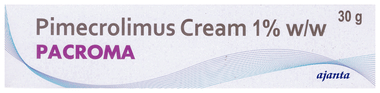
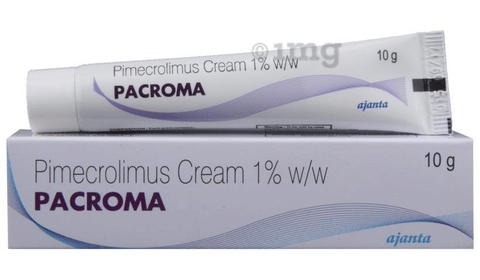
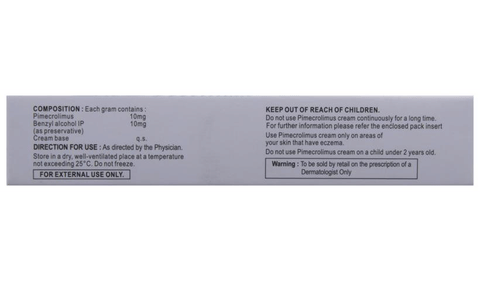
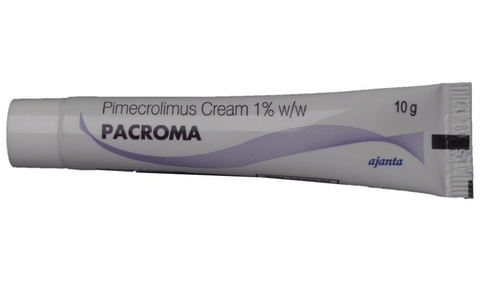
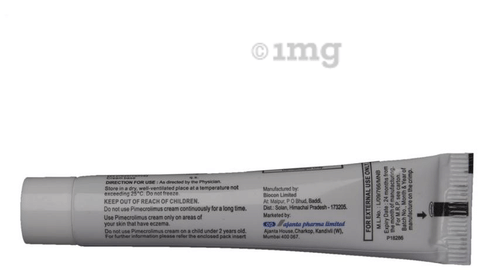
Pacroma Cream
Written By Dr. Anuj Saini, MMST, MBBS
Reviewed By Dr. Varun Gupta, MD Pharmacology, MBBS
Last updated on 12 Nov 2024 | 01:11 AM (IST)
Pacroma Cream is used to treat eczema (atopic dermatitis). It works by suppressing the activity of certain immune cells that cause inflammation (redness and swelling) of the skin. This relieves itching and improves rashes in atopic dermatitis.
 Genuine
Authenticity Assured
 Prescription
required
Size:
10 gm Cream

₹659 MRP ₹6793% off

Available pack size


General Information
The content is shown in English


All substitutes for Pacroma Cream
For information purposes only. Consult a doctor before taking any medicine.

Safety advice

Alcohol
No interaction found/established

Pregnancy
CONSULT YOUR DOCTOR
Pacroma Cream may be unsafe to use during pregnancy. Although there are limited studies in humans, animal studies have shown harmful effects on the developing baby. Your doctor will weigh the benefits and any potential risks before prescribing it to you. Please consult your doctor.

Breast feeding
CONSULT YOUR DOCTOR
Pacroma Cream is probably unsafe to use during breastfeeding. Limited human data suggests that the drug may pass into the breastmilk and harm the baby.

Driving
No interaction found/established

Kidney
No interaction found/established

Liver
No interaction found/established

References
- Burkhart C, Morrell D, Goldsmith L. Dermatological Pharmacology. In: Brunton LL, Chabner BA, Knollmann BC, editors. Goodman & Gilman’s: The Pharmacological Basis of Therapeutics. 12th ed. New York, New York: McGraw-Hill Medical; 2011. p. 1822.
- Robertson DB, Maibach HI. Dermatologic Pharmacology. In: Katzung BG, Masters SB, Trevor AJ, editors. Basic and Clinical Pharmacology. 11th ed. New Delhi, India: Tata McGraw Hill Education Private Limited; 2009. pp. 1053-54.
- Briggs GG, Freeman RK, editors. A Reference Guide to Fetal and Neonatal Risk: Drugs in Pregnancy and Lactation. 10th ed. Philadelphia, PA: Wolters Kluwer Health; 2015. p. 1121.
- Pimecrolimus. Bishop's, Stortford: Meda Pharmaceuticals; 2011 [revised Oct. 2018]. [Accessed 06 Apr. 2019] (online) Available from:

- Pimercrolimus. Wehr, Germany: Novartis Pharma Produktions; 2010. [Accessed 06 Apr. 2019] (online) Available from:
- Central Drugs Standard Control Organisation (CDSCO). [Accessed 06 Apr. 2019] (online) Available from:
- Pimecrolimus [Prescribing Information]. Mississauga, Ontario: Contract Pharmaceutical Limited; 2014. [Accessed 20 Feb. 2024] (online) Available from:

Related products
Products related to Pacroma Cream



100% genuine products

Safe & secure payments

No contact delivery

Fully sanitized facilities
Patient concerns
I have Scleroderma before 2 years , what can I do

Dr. Atula Gupta
Dermatology
Apply pacroma cream alternate night for 1 monthMoisturise with physiogel cream everydayTablets might be required depending on severityplease message details of previous treatments
Suffering from Atopic dermatitis 15months baby suffering from atopic dermatitis

Dr. Gopal Samdani
Paediatrics
Please consult skin specialist

Want to know more
We provide you with authentic, trustworthy and relevant information
Have issue with the content
Why we need a prescription?

Provide right medicines
Prescriptions are complex documents. We proof read and recheck at various steps to provide you the right medication in the correct form and dose

In accordance with the law
Most medicines cannot be sold without a valid prescription, as per the Drugs and Cosmetics Act, 1940 and Rules, 1945
