Sign in to your account
or
By signing in you agree to our
Terms & conditions
 and 
Privacy policy

Fever Package Extensive

For men & women
Starts at:
₹899
Know more about this test
<font color='#864291'>Know more about this test</font>

It is a panel of tests which helps in screening for some common causes of fever like malaria, dengue, typhoid and urinary tract infections (UTI). You should get this panel done if you are having high fever and weakness. This package will help identify the cause of your fever so that the correct treatment can be initiated.

What does Fever Package Extensive measure?

Contains 20 tests

The complete haemogram includes two main components: Complete Blood Count and Erythrocyte Sedimentation Rate. 

Blood is composed of blood cells suspended in blood plasma (yellowish colored liquid). These blood cells include red blood cells (also called RBCs or erythrocytes), white blood cells (also called WBCs or leukocytes), and platelets (also called thrombocytes).


Red blood cells (RBCs) are the most abundant blood cells. RBCs contain hemoglobin which helps in the transport of oxygen to the tissues. RBC count is a measurement of the number of RBCs in a given volume of blood. 


Packed Cell Volume (PCV) or Hematocrit (Hct) is a measurement of the blood volume occupied by RBCs. It is expressed in percentage.


White blood cells (WBCs) are the main components of the immune system. They protect the body from various infections and cancers. Total Leucocyte count (TLC) is a measurement of the total number of leucocytes (WBCs) in a given volume of blood. 


There are five types of WBCs:

  1. Neutrophils

  2. Basophils

  3. Eosinophils

  4. Lymphocytes

  5. Monocytes


Differential Leucocyte Count (DLC) determines the percentage of different types of WBCs.

Neutrophils, Basophils, and Eosinophils are called Granulocytes because of the presence of granules inside these cells.


Absolute count of different types of WBCs is the measurement of their absolute numbers in the given volume of blood.


In addition to counting, measuring, and analyzing red blood cells, white blood cells, and platelets, this test also measures the amount of hemoglobin in the blood and within each red blood cell.


Platelet count - Platelets (also called thrombocytes) are disc-shaped cell fragments without a nucleus that help in blood clotting. Platelet count is a measurement of the number of platelets in a given volume of blood. 


Mean Platelet Volume (MPV) is a measurement of the average size of platelets.


Hemoglobin (Hb) -  Hemoglobin (Hb) is a protein found in red blood cells (RBCs) that carries oxygen from the lungs to the body tissues. It transports oxygen in exchange for carbon dioxide, and then carry the carbon dioxide back to the lungs and where it is again exchanged for oxygen. 


Mean Corpuscular Volume (MCV) is the average volume of a red blood cell.


Mean Corpuscular Hemoglobin (MCH) is the average amount of hemoglobin present in the average red cell.


Mean Corpuscular Hemoglobin Concentration (MCHC) is the average concentration of hemoglobin in a given volume of red cells.


Red Cell Distribution Width (RDW) is a measurement of the variability of red blood cell size and shape. 


Complete blood count (CBC) includes the following tests:


  • Packed Cell Volume

  • Hemoglobin

  • Platelet Count

  • Differential Leucocyte Count (DLC)

  • Differential Eosinophil Count

  • Differential Neutrophil Count

    -    Differential Monocyte Count

      -    Differential Granulocyte Count

                             -     Differential Lymphocyte Count

                             -     Differential Basophil Count

  • Absolute Monocyte Counts

  • Red Blood Cell Count

  • RDW SD (Red blood cell distribution width)

  • Total Leucocyte Count

  • Mean Corpuscular Volume (MCV)

  • Mean Corpuscular Hemoglobin (MCH)

  • Mean Corpuscular Hemoglobin Concentration (MCHC)

  • Mean Platelet Volume

  • Absolute Leucocyte Count

  •  Absolute Eosinophil Count

  •  Absolute Lymphocyte Count

  •  Absolute Basophil Count

  •  Absolute Granulocyte Count

  •  Absolute Monocyte Count

  •  Absolute Neutrophil Count

The ESR depicts the rate at which red blood cells (erythrocytes) settle (sediment), in one hour, at the bottom of a tube that contains a blood sample. The test result is expressed in millimeters per hour (mm/hr).

In the presence of inflammation, the production of certain proteins mainly fibrinogen increases in blood. This high proportion of fibrinogen leads the red blood cells to form a stack (rouleaux formation) which settle quickly due to their high density.


Know more about Complete Haemogram

This further contains

  • Hemoglobin C
  • Hemoglobin

The Malarial Falciparum and Vivax antigen test is a rapid diagnostic test which detects the presence of malarial antigen in the blood sample. Malaria is an infectious disease which is caused by a species of Plasmodium parasite. It is transmitted by the bite of an infected mosquito (female anopheles). The species which cause infections in humans include Plasmodium Vivax, Plasmodium malariae, Plasmodium ovale, and Plasmodium falciparum. 


This malarial infection may rarely pass from a woman to her baby during pregnancy, labor, or delivery. Also, the chances of the spread of infection are very low through blood transfusion, sharing of contaminated needles or syringes, and organ transplant. 


When an infected mosquito bites a person, the parasites enter into the blood and travel to the liver. After a person is infected it takes about 7-30 days for the eggs to mature. The parasites enter the red blood cells of a person where they multiply inside these cells. These cells burst within 48 to 72 hours which leads to the occurrence of symptoms of malaria. 

The disease can relapse in case the infection is caused by P. vivax and P. ovale species. This is because these parasites can remain inoperative in the liver before they enter again into the blood and may take up to months and even years for the symptoms to appear.

If the malarial infection is not treated, it can cause severe illness and even death. The species likely to cause life-threatening disease is P. falciparum.


Know more about Malarial Antigen (Vivax & Falciparum) Detection

The Widal test measures the titres of antibody against the bacteria which cause Enteric fever.

Typhoid and paratyphoid fever are generally acquired when you consume food or water, contaminated by feces of an acutely infected or convalescent person (recovering from disease) or a chronic, asymptomatic carrier. The incubation period (the time interval between exposure to an infection and the appearance of the first symptoms) of Enteric fever is 6-30 days. Paratyphoid fever is similar but often less severe than typhoid fever.

Widal test is an agglutination test to detect antibodies (agglutinins) in a blood sample against two antigens (O & H) of bacteria, Salmonella enterica. Agglutination refers to the visible clumping of particles when a particulate antigen combines with its antibody in the presence of optimum conditions for antigen-antibody reaction. When this test is performed on a slide, it is called Slide agglutination and when it is carried out in a test tube,  it is called Tube agglutination. Widal test by Tube agglutination is recommended over Slide agglutination method. The antigens used in the test are “H” and “O” antigens of Salmonella Typhi and “H” antigen of S. Paratyphi.

Widal test should only be performed after the first week. The reason being the antibody against “O” and “H” antigens of Salmonella start appearing in serum at the end of the first week of fever. It is preferable to test two blood samples at an interval of 7 to 10 days to demonstrate rising antibody titres.

Know more about Widal Test (Slide Agglutination)

The Peripheral Smear Examination test is performed to check the characteristics of blood cells including:

  1. Red blood cells (RBCs)
  2. White blood cells (WBCs)
  3. Platelets

By placing the blood sample on a specifically treated slide, these blood components are analyzed under a microscope for their shape, size, and number. Any irregularity in these cells indicates blood disorders or abnormality, the presence of parasites in the blood, etc. This test is also a beneficial tool in monitoring a blood disease or deciding whether a certain medication or therapy is working effectively or not.

Know more about Peripheral Smear Examination

Chikungunya IgM
Did you find information useful ?
yesYES
noNO (1)

Fever Package Extensive test price for other cities

Price inAgraRs. 799
Price inAhmedabadRs. 799
Price inAllahabadRs. 799
Price inAmritsarRs. 799
Price inBangaloreRs. 799
Book a Fever Package Extensive test at home near me
Easy online booking
Easy online booking
Search for tests and packages, book a time and select address for seamless at-home lab tests.
Live tracking of phlebotomist
Stay informed with live tracking of our phlebotomist's location for seamless sample collection.
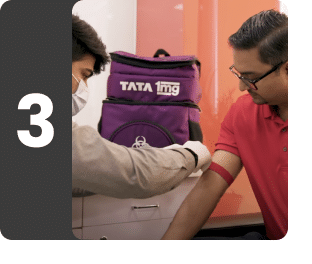
Safe collection
Safe collection
Our phlebotomists follow strict safety protocols to collect samples at home on time.
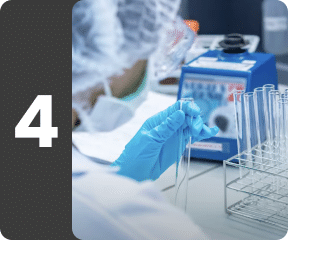
Sample received at lab
Your sample is bought to our laboratory for testing by our qualified experts.
Quick reports, free follow up
Reports are sent to your email. A free doctor follow up is provided to understand the report better
Recommended for everyone
This package is designed with everyone’s overall health considerations in mind, offering assessments to address a wide range of wellness needs.
Package can be booked by :
Men
Women
Package contains 20 tests
Complete Haemogram (2)
Hemoglobin C
Hemoglobin
Malarial Antigen (Vivax & Falciparum) Detection
Widal Test (Slide Agglutination)
Peripheral Smear Examination
Chikungunya IgM
Typhi Dot
Urine Routine & Microscopy (12)
Glucose - Fasting Urine
Urobilinogen
Ketone
Nitrite
Colour
Appearance
Specific Gravity
Epithelial Cell
Casts
Crystals
Protein Urine
Ph for Urine
Dengue Antigen NS1 Antigen
Report delivery
Standard time
18 hrs
For slots after 11 AM, report will be delivered in 48 hours.