







Serum Iron Studies Comprehensive
Also referred as
Iron serum
+2
Iron profile
Iron indices

For men & women

Know more about this test

The Serum Iron Studies Comprehensive package is a group of blood tests that measures the amount of iron in your blood. This test helps detect conditions associated with iron deficiency or iron overload. It may be done as a follow-up to certain routine rests or during anemia therapy.

Samples required
Blood 2


Find out
Why is this test booked?
Packages containing Serum Iron Studies Comprehensive

Comprehensive Tax Saver Package Men
Contains 76 testsGet reports within 18-24 hrs
₹5100

Comprehensive Tax Saver Package Women
Contains 78 testsGet reports within 18-24 hrs
₹5000

Advanced Tax Saver Health Check
Contains 51 testsGet reports within 18-24 hrs
₹2499

Comprehensive Platinum Full Body Checkup with Smart Report
Contains 73 testsGet reports within 18-24 hrs
₹1073

Women Health Checkup Premium with Smart Report
Contains 56 testsGet reports within 18-24 hrs
₹3589

Comprehensive Platinum Full Body Checkup
Contains 68 testsGet reports within 18-24 hrs
₹3721

Men Health Checkup Premium with Smart Report
Contains 103 testsGet reports within 18 hrs
₹3599

Women Health Checkup Premium with Smart Report
Contains 104 testsGet reports within 18 hrs
₹3629

Senior Citizen Women Health Checkup Premium with Smart Report
Contains 105 testsGet reports within 18 hrs
₹4169

Senior Citizen Men Health Checkup Premium with Smart Report
Contains 104 testsGet reports within 18 hrs
₹4009
Test Information is reviewed by: Dr. Swati Gupta (Anand), MBBS, MD Lab Medicine and written by Dr. Lipika Khurana, BDS, PGDHHM . The test details are for information purpose only. Consult a doctor before taking any test. Last updated on: 21st Jan 2026
Did you find information useful ?
 YES (1)
 NO (1)
Book a Serum Iron Studies Comprehensive test at home near me
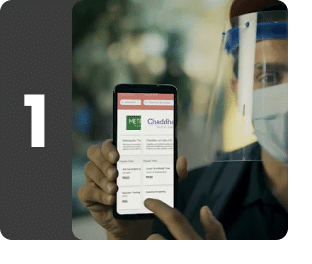
Easy online booking
Search for tests and packages, book a time and select address for seamless at-home lab tests.
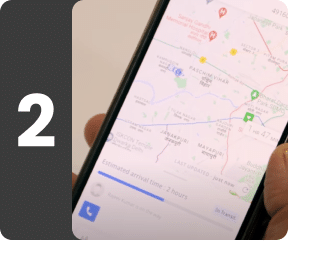
Live tracking of phlebotomist
Stay informed with live tracking of our phlebotomist's location for seamless sample collection.
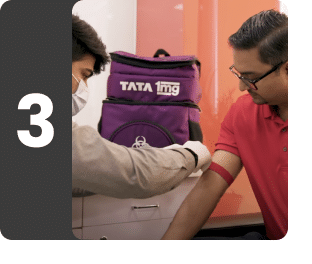
Safe collection
Our phlebotomists follow strict safety protocols to collect samples at home on time.
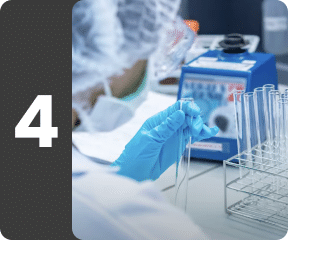
Sample received at lab
Your sample is bought to our laboratory for testing by our qualified experts.
Quick reports, free follow up
Reports are sent to your email. A free doctor follow up is provided to understand the report better



References
- Iron and Total Iron-Binding Capacity [Internet]. Rochester, NY: University of Rochester Medical Center; [Accessed 28 Jun. 2023]. Available from:

- How is Iron-Deficiency Anemia Diagnosed? [Internet]. HOA; [Accessed 28 Jun. 2023]. Available from:
- Knovich MA, Storey JA, Coffman LG, et al. Ferritin for the clinician. Blood Rev. 2009;23(3):95-104. [Accessed 28 Jun. 2023]. Available from:
- Campbell NR, Hasinoff BB. Iron supplements: a common cause of drug interactions. Br J Clin Pharmacol. 1991 Mar;31(3):251-5. [Accessed 28 Jun. 2023]. Available from:
- Iron deficiency anemia [Internet]. NHS; 29 Jan. 2023 [Accessed 16 Mar. 2023]. Available from:

Recommended for everyone
This package is designed with everyone’s overall health considerations in mind, offering assessments to address a wide range of wellness needs.
Contains 5 tests
Report delivery
Standard time
12 hrs
For slots after 11 AM, report will be delivered in 24 hours.
Samples required
Blood 2
Why is this test booked?
1
As part of routine health checkups to estimate iron levels in your body.
2
If you have signs or symptoms of iron-deficiency anemia, like pallor, fatigue, weakness, or headaches.
3
If your CBC shows that your hemoglobin and hematocrit are low and RBCs are smaller and paler than usual, which are usually suggestive of iron deficiency anemia.
4
If you have signs or symptoms of increased iron accumulation in the body, like joint pain, abdominal pain, fatigue, loss of body hair, etc.